The weekend
Four days in Haro, the wine capital of Rioja Alta, chosen for one overwhelming reason: the Barrio de la Estación. Seven historic bodegas — López de Heredia, La Rioja Alta, CVNE, Muga, Roda, Gómez Cruzado and Bodegas Bilbaínas — sit within a few hundred metres of each other around the old railway station, all receiving visitors. You can walk between world-class cellars in less time than it takes to park a car. Nowhere else in the wine world offers that.
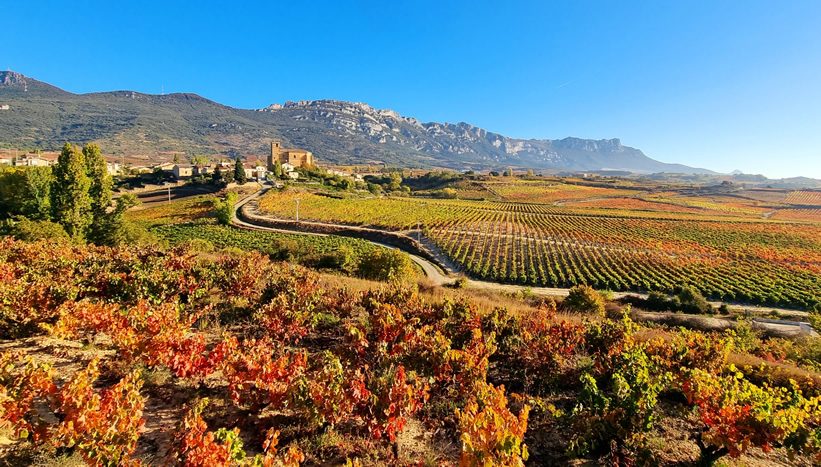
October in Rioja is also the warmest and sunniest on the list — often 18–22°C — and the vineyards turn extraordinary shades of ochre, rust and gold. It is comfortably the best value too.
A little history
The Ebro valley has made wine since the Romans, but Rioja as we know it was created by disaster elsewhere: when phylloxera destroyed Bordeaux's vineyards in the 1860s and 70s, French négociants crossed the Pyrenees, brought barrel-ageing and Bordeaux technique with them, and built their bodegas beside the new railway at Haro so the wine could travel. That is why the Barrio de la Estación exists at all — it is a 19th-century industrial cluster that happens to have become sacred ground. Haro also claims to have been one of the first towns in Spain with electric street lighting, in 1890.
What it costs
Per person for the whole weekend, priced for a party of four — two twin rooms, or one whole place between you. Everything but the bed is fixed, so where you sleep is the only row that moves and the only one shown as a range.
| Per person | |
|---|---|
| Getting there, both ways | £140 |
| Three nights | £65–110 |
| Bikes and getting about | £38 |
| Eating, drinking and tastings | £155 |
| The weekend, per person | ~£400–440 |
Where to sleep
| Option | Per person |
|---|---|
| Hotels — two twin rooms | |
| Small hotels and pensions in Haro | €28 a night £70 for three |
| Eurostars Los Agustinos — four-star in a 14th-century convent, the cloister glazed over as the lounge | €42 a night £110 for three |
| Airbnb and self-catering — one whole place | |
| The typical Haro listing | €26 a night £65 for three |
Eating and drinking
| What | Each |
|---|---|
| A menú del día — three courses with a drink | €12–16 |
| Pinchos along the Calle Laurel in Logroño | €2–4 each |
| Dinner with a bottle of Reserva | €30–50 |
| A standard bodega tour and tasting | €10–20 |
The £155 above assumes the middle of this list: a cheap lunch, an ordinary dinner, one good one over the weekend, and wine throughout. It does not change with the room.
Day by day
Friday Arrive, and an afternoon at Vivanco
- Morning flight to Bilbao; transfer over the hills into the Ebro valley, arriving in Haro early afternoon.
- Straight out to Briones — ten minutes by taxi — for Vivanco. Friday is one of its late days: open until 20.00 from June to September and on Fridays and Saturdays from October to May, so an afternoon arrival still leaves a comfortable three or four hours.
- Allow two hours for the museum alone. The Museum of Wine Culture is not a bodega gift shop with a few barrels — it is a serious collection: Roman and Egyptian presses, Picasso and Miró on wine themes, illuminated manuscripts, and three thousand corkscrews arranged as a history of the object. The working bodega and the vineyard of a couple of hundred varieties are separate again.
- Putting it here does two things: it takes the pressure off the Saturday ride, which already has two cellars on it, and it means the one visit where you will want to walk slowly and read the labels is the one you do with no bike waiting outside.
- Back to Haro for the evening: pintxos and a glass of Reserva around the Plaza de la Paz.
Saturday Across the Ebro, down Rioja Alta, home by Ollauri
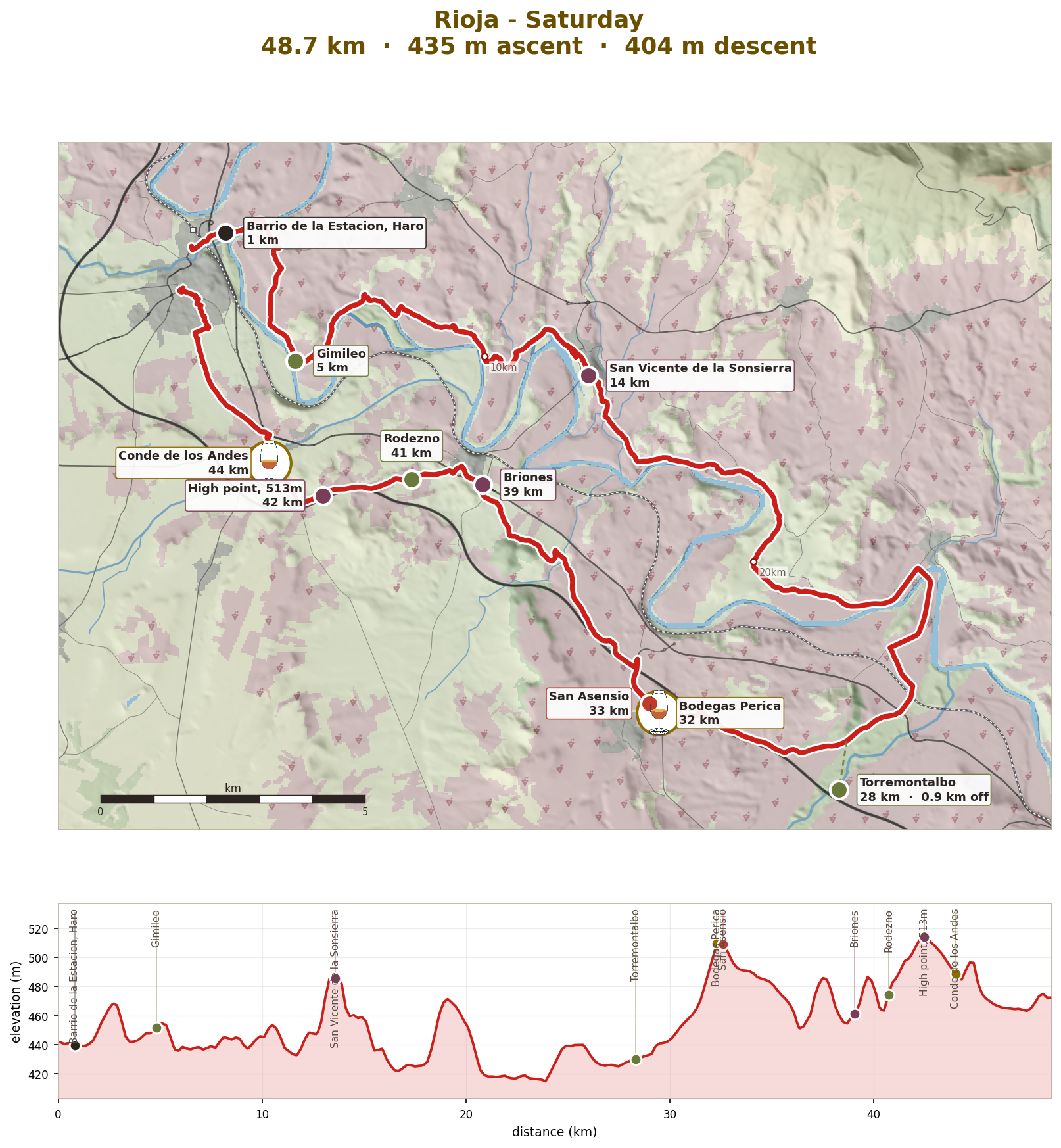
- 48.7km with 435m of ascent, on gravel — well balanced against the Sunday, and with the two cellars placed where they belong: at lunch and near the end.
- Out of Haro through Gimileo and along the vines to San Vicente de la Sonsierra at 14km, a fortress church on a crag above the Ebro, and the river crossing.
- South-east down the Rioja Alta plain past Torremontalbo at 28km, on the Najerilla.
- Bodegas Perica at 32km, on the edge of San Asensio, and the lunch stop. A family bodega since 1912, and a working one rather than a showpiece — the visit starts out in the vineyard. Saturdays are 10.00–14.00 only, booking obligatory, and it runs ninety minutes to two hours, so this is the stop that sets what time you leave Haro. Aim to be there by half past eleven.
- Briones at 39km — the hilltop silhouette that is on half the labels in the region. You ride past the foot of it, and past Vivanco, which is the argument for having done that on the Friday.
- Over the day's high point of 513m at 42km, then down to Conde de los Andes at Ollauri, 44km: five centuries of calados cut into the hill, the deepest network in Rioja, holding bottles back to 1892. Visits 10.00–18.30 by appointment. Five downhill kilometres from the door to Haro, which is exactly where you want the day's second glass to be.
48.7 km · 435 m of ascent · 416–514 m
Sunday Up the Tirón, over the Obarenes, home to the bodegas
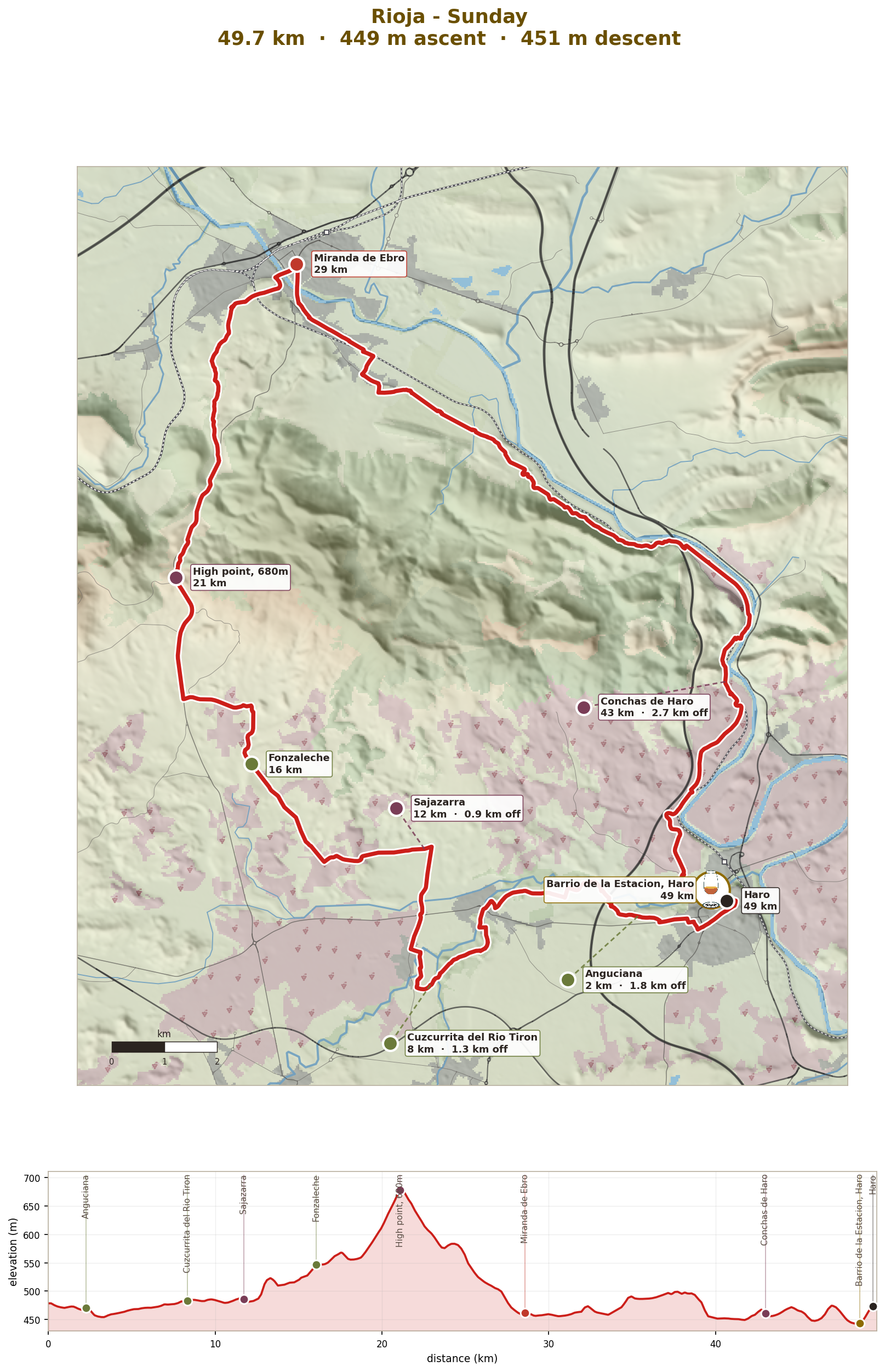
- 49.7km with 449m of ascent, again on gravel. Ridden clockwise so that the climbing is done early and the Barrio de la Estación is the last thing on the route rather than the first.
- West out of Haro up the Tirón through three castle villages: Anguciana at 4km, Cuzcurrita del Río Tirón at 9km, whose castle stands on the riverbank, and Sajazarra at 12km — fifteenth-century castle, and one of the officially most beautiful villages in Spain.
- Fonzaleche at 16km, and then the climb: up into the Montes Obarenes, topping out at 680m at 21km. The highest point of the weekend and the emptiest ground on it, and after this the day is downhill in instalments.
- Miranda de Ebro at 29km is the far point and a crossing into Burgos province — a working railway town rather than a wine one, and the only place on the loop for a proper lunch.
- East down the Ebro past the Conchas de Haro at 45km, the gorge where the river cuts through between the Obarenes and Cantabria ranges. The cliffs of Bilibio above it are where the Batalla del Vino is fought every June — several thousand people in white shirts throwing wine over each other, a genuine centuries-old ritual rather than a stunt laid on for visitors.
- The Barrio de la Estación at 49km, with a kilometre left to ride. R. López de Heredia for the cobwebbed 19th-century cellars, wines released after a decade in barrel and the Zaha Hadid pavilion grafted onto the front like a spaceship on a farmhouse; Muga two hundred metres away, still fining with fresh egg whites and coopering its own barrels; La Rioja Alta or CVNE beyond. Seven historic houses within a few hundred metres of the station, and several now pour on the terrace without a formal tour — check Sunday hours before you count on it.
- Afterwards, the long Spanish lunch. Chuletillas al sarmiento — lamb chops grilled over vine cuttings — at a Haro asador, taken seriously and at length.
49.7 km · 449 m of ascent · 442–680 m
Monday Home
- Morning in Haro: the Wednesday-and-Saturday market if timing allows, otherwise coffee and a last walk round the Barrio.
- Midday transfer to Bilbao — or an hour at the Guggenheim if the flight is late enough.
- Evening flight to London.
When to go
Spring — March to May
8–19°C, green and lush, with the Sierra Cantabria still snow-capped behind the vineyards. Changeable, and rain is likely — but the bodegas are quiet and attentive.
Summer — June to August
15–30°C, hot in the afternoons and cool at night thanks to the altitude. June brings the region's wildest festival; July and August are for early rides and long lunches.
Autumn — September and October
10–21°C. Harvest through late September and October, the vines turning red-gold across the Ebro valley, and the bodegas at their busiest but most alive.
When to go
Late June for the Batalla del Vino, or late September for the harvest and the Logroño festival.
Festivals
None of this weekend assumes a festival. The rides work on any weekend of the year, and the station-quarter bodegas take visitors throughout. If your dates land on the Batalla del Vino on 29 June, do not plan to ride that morning. The trade is worth stating plainly: on a festival weekend the growers are behind a stand in the square rather than showing visitors round a cellar, so book private tastings weeks ahead or accept that some will be shut, and expect beds to be scarcer, dearer and gone months in advance.
Summer
Batalla del Vino, Haro — 29 June
Thousands of people climb the Bilibio cliffs at dawn and drench each other in red wine. Wear white, expect to ruin it, and do not bring anything you care about.
Cata del Barrio de la Estación — June
The great bodegas of the station quarter open together for one of Spain's best tastings, alongside the Haro festival week.
Autumn
Fiesta de la Vendimia Riojana, Logroño — 21 September
The San Mateo festival: the first grapes trodden in the Plaza del Mercado, and a week of it afterwards.
Harvest at the bodegas — late September into October
Haro's station quarter is walkable between seven great houses, and they take visitors throughout.
Getting there
From London, per person, assuming bikes are hired locally rather than flown. Fares checked September 2026 and converted at €1 to 86p.
| Leg | Time | Cost |
|---|---|---|
| The flight | ||
| BA, Vueling or easyJet from Heathrow, Gatwick or Stansted to Bilbao (BIO) | 2h 00 | £60 |
| Through the Basque hills | ||
| Bus or pre-booked minibus to Haro (€12 by bus). The longest ground leg on the site, and a good one — it climbs out of the Basque country and drops into the Ebro | 1h 20 | £10 |
| Waiting and one change | 1h 00 | — |
| Door to door, one way | 4h 20 | £70 |
| Both ways | £140 | |
Bilbao to Logroño by train or bus, then forty minutes on to Haro, is cheaper and slower with more changes.
Bike hire
Assumes hybrids, or e-bikes for the Sierra de Cantabria side.
| Shop | Rate |
|---|---|
| OjaSport, C/ Linares Rivas 44, Haro — mountain, leisure and electric bikes, and the only serious hire in Haro itself | rates on request |
| La Rioja Bike Tours, Logroño — hire and guided rides through the vineyards | rates on request |
| Hogar Ciclos, C/ General Vara de Rey 51, Logroño — a shop first and hire second, but it knows the roads | rates on request |
Haro is small: book before you arrive rather than turning up on a Saturday morning.
Getting about
| What | Cost |
|---|---|
| Bike hire, Saturday and Sunday | £30 |
| Buses along the Ebro, allow | £8 |
| Getting about, whole weekend | £38 |
The wineries
R. López de Heredia Viña Tondonia
The most romantic cellar in Spain: mould-furred barrel halls, hand-made barrels, wines released after a decade, and a Zaha Hadid pavilion out front. Tours daily, book ahead.
Bodegas Muga
Still fines with egg whites and coopers its own barrels in-house. One of the most instructive tours anywhere.
Bodegas Perica
Right on the route at the lunch stop, and a working family bodega rather than a showpiece — the visit starts out in the vineyard and works through the cellar before the tasting. Saturdays 10.00–14.00 only (Monday to Thursday 10.00–17.00), booking obligatory, and it runs 90 minutes to two hours. 941 45 71 52.
Conde de los Andes
Three old buildings above a network of underground galleries cut into the Ollauri hill over five centuries, holding hundreds of thousands of bottles going back to 1892 — the estate took on the old Paternina cellars and the historic Conde de los Andes name in 2014. The best-placed tasting of the weekend: 43km in, five downhill kilometres from Haro. Visits 10.00–18.30, by appointment.
La Rioja Alta S.A.
Classical, long-aged Rioja — the Viña Ardanza and Gran Reserva 904 are benchmarks.
Dinastía Vivanco
Working bodega plus the Museum of Wine Culture: Roman presses, Picasso and Miró on wine themes, and 3,000 corkscrews. Allow two hours — which is why it will not fit inside either riding day. It sits directly on the Saturday route at 39km, but two hours there on top of Perica and Conde de los Andes is more than one day holds — so it goes on the Friday instead, ten minutes by taxi from Haro. Closed Mondays; open to 20.00 in summer and on Fridays and Saturdays October to May, which is what makes an afternoon arrival work. Closed Mondays, and the hours swing by season: 10.00–20.00 in summer, 10.00–18.00 October to May, and only 10.00–15.00 Wednesday to Sunday early in the year.
The wines
Tempranillo, aged in American oak, and classified by time rather than terroir: Crianza, Reserva and Gran Reserva denote years in barrel and bottle before release. López de Heredia's Viña Tondonia Gran Reserva is released after a decade or more and tastes like nothing else on earth. Alongside: Garnacha, Graciano, and increasingly serious white Rioja from Viura.
Eat & drink
| Friday | Pintxos and Reserva on the Plaza de la Paz |
| Saturday | Lunch in Laguardia, above the medieval cellars |
| Sunday | The long asador lunch — chuletillas al sarmiento |
| Monday | Coffee in Haro; Bilbao if time allows |
The food
Chuletillas al sarmiento (lamb chops over vine cuttings), patatas a la riojana, piquillo peppers stuffed with cod, pochas beans, and the pintxo culture of the Basque country an hour north. Late October brings wild mushrooms and the first of the season's game.
Where to stay
Hotel Los Agustinos
The cloister has been glazed over to make an extraordinary covered courtyard. Central, and the obvious choice.
Hotel Marqués de Riscal
Frank Gehry's titanium wave over a 19th-century bodega. Expensive, unforgettable, and 15km from Haro.
Hospedería Los Parajes
If you would rather wake in the walled hill town — beautiful rooms above a medieval cellar, though fewer of them.
Practical
- Both days are gravel. 435m of ascent on the Saturday and 451m on the Sunday, much of it on unsealed vineyard and forest track — hire gravel or mountain bikes rather than road bikes.
- Rioja Alavesa is not on either ride. Laguardia, Ysios and the Gehry hotel at Elciego sit across the Sierra de Cantabria — reachable as a 35km one-way ride with a van back, or as a car day. Worth a Monday morning if the flight is late.
- Keep the Barrio de la Estación for the days off the bike. López de Heredia, Muga, La Rioja Alta and CVNE all sit within a few hundred metres of each other beside the station, which is exactly why they belong to the Friday afternoon and the Sunday evening.
- Spain allows cyclists 0.5 g/l (0.25 mg/l on the breath), and since 2025 has been testing and fining cyclists in earnest — €500 to €1,000. See the country-by-country table.
- Book the bodegas now. López de Heredia and Muga run limited daily tours in English and fill weeks ahead. The rest of the trip can wait; these cannot.
- Among the cheapest on the list for food and lodging — Spain in the shoulder season, with three-course menús del día at prices that will startle anyone used to London.
- The transfer is the price of admission: 1h15–1h30 from Bilbao. Pre-book a minibus for the group plus bikes rather than relying on public buses.
- Cycling is rolling, not flat — no long climbs, but few flat kilometres either. Hybrids fine; e-bikes make the Laguardia run trivial.
- Spanish hours: lunch at 14:00, dinner from 21:00. Plan rides around a long lunch rather than fighting it.
- Barrio de la Estación, Haro — the seven bodegas, with links to each one's booking page
- Rioja DOC official site — the appellation — classifications, producers, visiting
- La Rioja Turismo — official tourism board — routes, events, bodega visits
- Rioja Alavesa Tourism (Laguardia) — the Basque half of Rioja, for the Saturday ride